
Paradise Valley vs. North Scottsdale: Which Fits Your Lifestyle?
 By Kyara Eyre · Published August 10, 2026 · Williams Luxury Homes
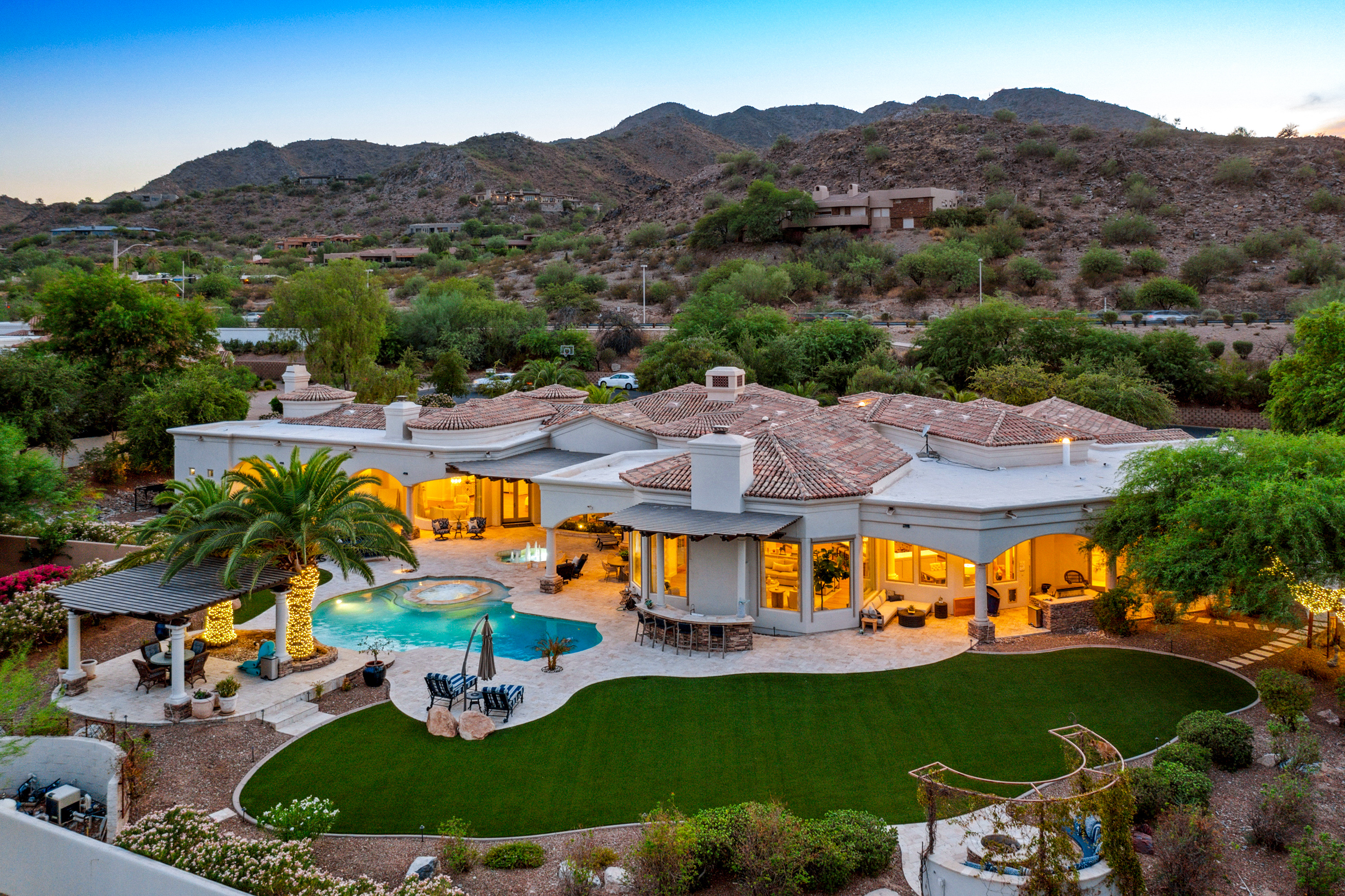
Paradise Valley and North Scottsdale sit next to each other on the map, but they read very differently on the ground. One is a quiet, incorporated town built around mountain views and low commercial density. The other is a sprawling, golf-anchored stretch of desert with resort culture built into its clubs and restaurants. Here's how the two compare, place by place.
How do home prices compare between Paradise Valley and North Scottsdale?
Paradise Valley generally runs from about $2 million to $30 million or more, while North Scottsdale spans a wider band, from about $400,000 at the entry level up to $19 million or more. The two overlap heavily in the middle of the market, but they start and top out at different points.
Paradise Valley's range is narrower and sits entirely in luxury territory. There is effectively no entry-level tier. North Scottsdale's much larger geographic footprint means it stretches from more accessible price points near its outer edges to guard-gated estate pricing inside Silverleaf and Desert Mountain. Buyers should pull current comparables for the exact subdivision they're considering in either area, since a single average figure can be misleading across such wide ranges.
How does the golf and club scene differ between the two?
North Scottsdale has a far larger concentration of golf-anchored communities and clubs than Paradise Valley. TPC Scottsdale, host of the WM Phoenix Open, sits within North Scottsdale, alongside golf-oriented subdivisions like Troon North, Desert Mountain, and Estancia, each combining course access with varying degrees of guard-gated privacy.
Paradise Valley does include country club subdivisions, notably Paradise Valley Country Club Estates and Camelback Country Club Estates, but golf club density is not the area's defining feature the way it is across North Scottsdale. Someone whose daily routine is anchored around a golf club will generally find more options concentrated in North Scottsdale.
How does the dining and commercial scene compare?
Dining in Paradise Valley clusters tightly around the Sanctuary/El Chorro corridor, with Elements at Sanctuary and Il Bracco among the best-known spots, plus Harry & Izzy's, Blanco Cocina + Cantina, and Pomo Pizzeria Napoletana nearby. Paradise Valley intentionally keeps commercial density low, so most retail and additional dining is a short drive into neighboring Scottsdale or Phoenix.
North Scottsdale's restaurant scene is broader and more spread out, reflecting its resort and golf-club culture. Mastro's City Hall Steakhouse, Ocean 44, Etta, Volanti, Butters Pancakes & Cafe, and Dominick's Steakhouse all serve the area, along with Isabella's Kitchen inside Grayhawk. There's simply more commercial density to work with across North Scottsdale's larger footprint.
How does privacy and gating compare?
In both areas, privacy and gating are not the same thing. Paradise Valley's general sense of privacy comes more from town-wide factors (low commercial density, large lots, and zoning) than from gating itself; most of the town is open, non-gated streets. Guard-gated sections exist specifically within subdivisions like Paradise Valley Country Club Estates and Camelback Country Club Estates, with some individual estates elsewhere adding their own walls or private drives.
North Scottsdale's privacy is tied more directly to specific guard-gated subdivisions. Silverleaf and Desert Mountain offer guard-gated estate privacy, while other North Scottsdale subdivisions, such as DC Ranch and Grayhawk, are more open, master-planned neighborhoods. The result: Paradise Valley's privacy is more a function of town-wide density and zoning, while North Scottsdale's gated privacy is concentrated within particular subdivisions rather than spread across the whole area.
What defines the geography and landmarks of each area?
Paradise Valley is anchored by Camelback Mountain along its southern edge and Mummy Mountain near its center, both of which shape which lots command unobstructed mountain views and both of which offer public hiking access. The town sits directly between Phoenix and Scottsdale as its own incorporated municipality.
North Scottsdale is anchored by TPC Scottsdale and the McDowell Sonoran Preserve, whose trail system runs along much of the area's northern and eastern edges. Where Paradise Valley's landmarks are two specific mountains, North Scottsdale's geography is defined by a much larger swath of golf corridors and protected desert.
See the full community profile for each area, including subdivisions, landmarks, and lifestyle detail, in the Paradise Valley guide and the North Scottsdale guide.
Which one has more day-to-day walkability or amenities nearby?
Neither area is built around walkable retail in the traditional sense, but the amenity pattern differs. Paradise Valley concentrates its amenities in one tight corridor near Sanctuary and El Chorro, with everything else a short drive away in Scottsdale or Phoenix. North Scottsdale spreads its amenities (golf clubs, resort dining, trailheads) across a much wider area, so proximity to any one amenity depends heavily on which subdivision a property sits in.
In practice, this means Paradise Valley offers a smaller, more concentrated set of nearby options, while North Scottsdale offers more total amenities but spread across greater distances. Reviewing a specific property's distance to the amenities that matter most is more useful than treating either area as uniformly close to everything.
| Paradise Valley | North Scottsdale | |
|---|---|---|
| Price range | $2M – $30M+ | $400K – $19M+ |
| Defining landmark | Camelback Mountain & Mummy Mountain | TPC Scottsdale & McDowell Sonoran Preserve |
| Dining anchor | Sanctuary / El Chorro corridor | Resort & golf-club dining, area-wide |
Frequently asked questions
How do home prices compare between Paradise Valley and North Scottsdale?
Paradise Valley generally runs from about $2 million to $30 million or more, while North Scottsdale spans a wider band, from about $400,000 at the entry level up to $19 million or more in communities like Silverleaf and Desert Mountain.
Is Paradise Valley more private than North Scottsdale?
Paradise Valley's privacy comes mainly from town-wide low commercial density and large lots, not from gating. Most of the town is open, non-gated streets. North Scottsdale's privacy is concentrated within specific guard-gated subdivisions such as Silverleaf and Desert Mountain, alongside more open sections elsewhere in the area.
Which area has more golf communities, Paradise Valley or North Scottsdale?
North Scottsdale has a far larger concentration of golf-anchored communities and clubs, including TPC Scottsdale, Troon North, Desert Mountain, and Estancia. Paradise Valley includes country club subdivisions such as Paradise Valley Country Club Estates, but golf is not the area's defining feature the way it is in North Scottsdale.
Which area has better dining and restaurants?
Both areas have notable dining, but the character differs. Paradise Valley's dining clusters around the Sanctuary/El Chorro corridor, including Elements at Sanctuary and Il Bracco. North Scottsdale has a broader, more spread-out restaurant scene tied to its resort and golf-club culture, including Mastro's City Hall Steakhouse and Ocean 44.
What are the defining landmarks of each area?
Paradise Valley is defined by Camelback Mountain and Mummy Mountain. North Scottsdale is defined by TPC Scottsdale, host of the WM Phoenix Open, and the McDowell Sonoran Preserve's trail system.
Can I get a comparative market analysis for both areas?
Yes. Contact Kyara Eyre at 708-714-2896 or kyara@williamsluxuryhomes.com for current comparables and guidance across Paradise Valley, North Scottsdale, or both.
Trying to decide between the two?
Reach out to Kyara Eyre at 708-714-2896 or kyara@williamsluxuryhomes.com for current comparables and a closer look at how Paradise Valley and North Scottsdale stack up for a specific budget or property type.